Public land seasons are often shorter or more restricted than private land. Hunters must follow Alabama Department of Conservation regulations, including season dates, bag limits, and licensing requirements.
With its diverse hunting locations ranging from the Appalachian mountains' forested habitat to the south's delta swamps, Alabama offers a unique experience for those targeting the Eastern wild turkey. This variety and challenging landscape make it a must-visit destination for seasoned hunters looking to test their skills.
While the season may be short, the bag limit is more than generous. It's perfect for stocking your freezer. Here's everything you need to know about the Alabama turkey season 2026, ensuring you're fully prepared for a successful hunt. Don't forget your sunscreen and bug spray — you'll need it!
Updated May 19, 2026
When Does Alabama Turkey Season Start?
The Alabama turkey season is zoned geographically into three zones plus additional areas designated as Wildlife Management Areas (WMA) and U.S. Forest Service Ranger Districts. Here are the dates for 2026!
Alabama Turkey Spring Season 2026 Dates | |
|---|---|
Zone 1
| Zone 2
|
Zone 3
| WMA and U.S. Forest Ranger DistrictsBankhead Ranger District; WMAs (Lauderdale, Freedom Hills, Black Warrior, Coon Gulf, Riverton CHA and Martin CHA)
Remaining National Forest DistrictsTalladega Ranger District, Shoal Creek Ranger District, Oakmulgee Ranger District, Tuskegee Ranger District and Conecuh Ranger District) and WMAs that allow turkey hunting:
|
Note that the only fall dates for hunting turkeys are in Zone 3.
Alabama Turkey Fall Season Dates |
Note: Fall 2026 dates are pending from the Alabama Department of Conservation.
|
Licensing, Bag Limits, and Legality
Understanding the hunting regulations in Alabama is crucial for a successful and responsible hunt. To hunt Eastern turkey in Alabama, you'll need a hunting license, a harvest record, and a special permit if hunting a WMA zone.
Remember, harvested turkeys must be reported within 48 hours through the game check portal. You can take one gobbler daily for a total of four during the combined seasons (only two if hunting a WMA or National Forest zone).
Note: If born on or after August 1, 1977, you'll be required to have a hunting education certification before applying for your hunting license in Alabama.
How to Plan Your Alabama Turkey Hunt
With season dates top of mind, let's plan your hunt! Preparation increases your chances of bringing home a gobbler this season.
| How to Plan a Turkey Hunt in Alabama: |
|
Combining HuntWise mapping with your pre-season scouting intel gives you a significant advantage, especially if you are hunting an unfamiliar piece of public ground for the first time.
The Wild Turkeys of Alabama
There's only one turkey subspecies native to Alabama: the Eastern wild turkey. Here's everything you need to know about this bird in Alabama.
Habitat
The Eastern wild turkey of Alabama lives in mixed pine and hardwood environments in both bottomland and upland areas. It forages in open areas and will also head to more of these zones when mating.
Habits
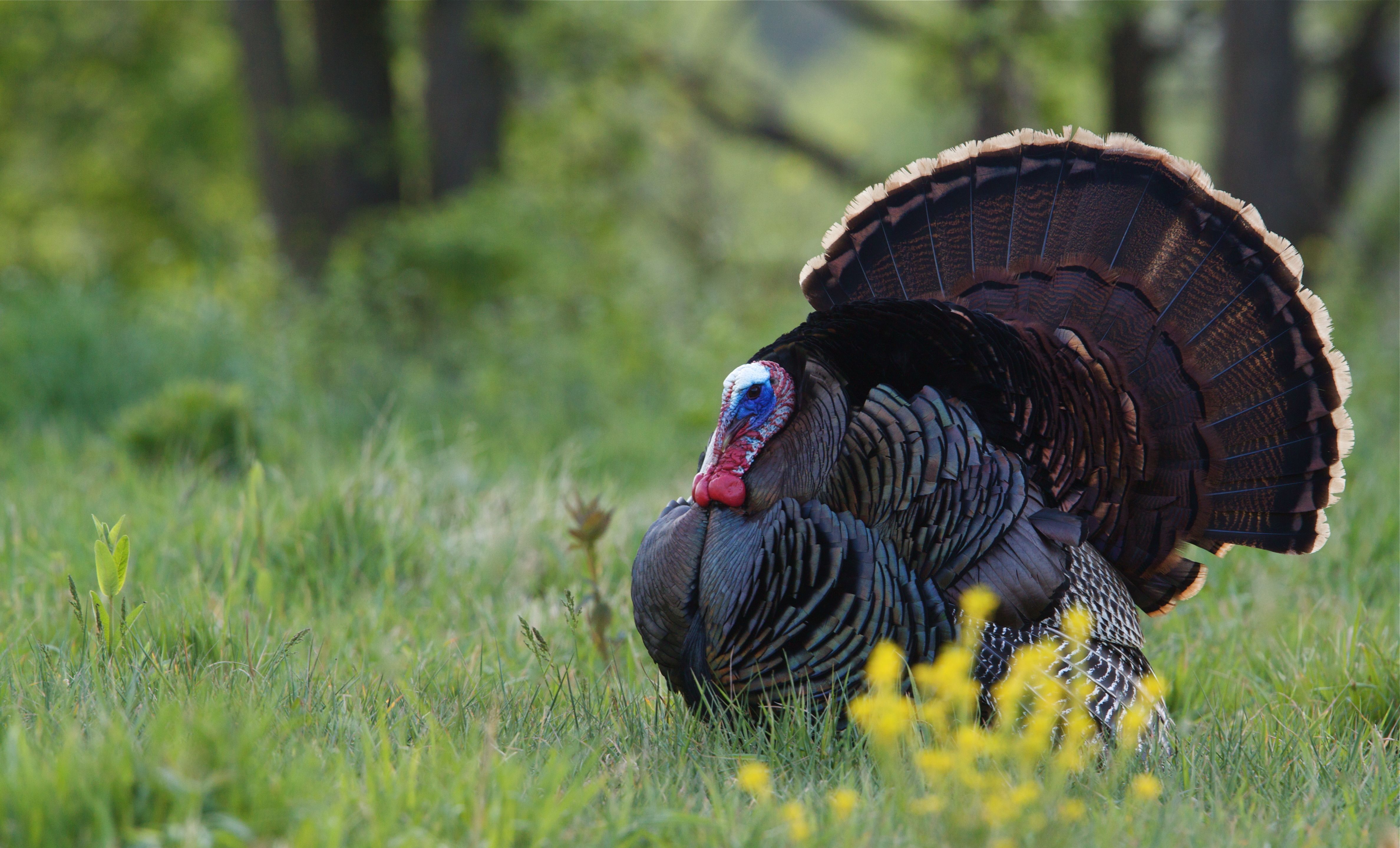
The mating season for the Eastern wild turkey begins in early March. This is when the forest comes alive with the sounds of male gobblers making audible gobbles and drums and showcasing their strutting abilities in the hopes of pairing up with a hen.
During this time, you'll have the best chance of calling in a tom.
As the weather warms, these behaviors can become more prominent, whereas hierarchies and the formation of social groups tend to occur during the winter.
Appearance
Adult turkeys are covered with 5,000 to 6,000 feathers ranging in coloration from red, green, copper, bronze, and gold, depending on age, with black-tipped body feathers. Regarding size, a male can weigh anywhere from 16 to 20 pounds — plenty of meat for a delicious meal!
Diet
Indiscriminate in their diet, male birds will eat a broad spectrum of food sources, including fruits, insects, buds, and grass.
They will fly up into trees, eat buds and flowers, and go after crops, including clovers, grasses, corn, wheat, oats, and other cereal grains as available. The Alabama wild turkey diet is highly seasonal and depends on the bioavailability of the current environment.
Final Tips to Bring Home a 'Bama Bird This Season
The Eastern wild turkeys of Alabama are notoriously tricky. They have highly attuned vision and hearing, and the slightest shifts in color in the natural landscape or uncommon sounds will spook them immediately.
Maximize your chances of tagging out this season with these practical tips. From understanding the turkey's behavior to using decoys and calls effectively, these strategies will help you in your hunt for the Eastern wild turkey in Alabama.
Using Decoys and Calls
Practice a variety of calls, including yelps, clucks, cuts, purrs, and whines. Be sure to get pre-season practice in with a seasoned hunter or instructor who can help you practice realism and authenticity in your calling.
Decoys are only permitted in the Spring season and cannot be used during the first ten days of each separate zone season. Additionally, mechanical turkey decoys are illegal in Alabama, so invest in some quality non-mechanical fabric decoys that can be packed away quickly and set up in the changing Alabama landscape.
Using a Blind
After pre-season scouting, set up your blind in areas of high movement, such as passageways and close to water sources where you've noted signs of turkey movement.
In Alabama, you'll want to set up close to hardwood ridges with a hard mast or soft mast or target openings along the river's edge where turkeys are likely to be. Study this landscape and choose the blind that best blends into the natural landscape. Use local vegetation to add cover, and always set up early in the season, wherever possible.
Use HuntWise For (Almost) Everything Else
Alabama is a popular hunting destination due to the range of fauna available to hunters. Due to this, it can experience significant hunting pressure.
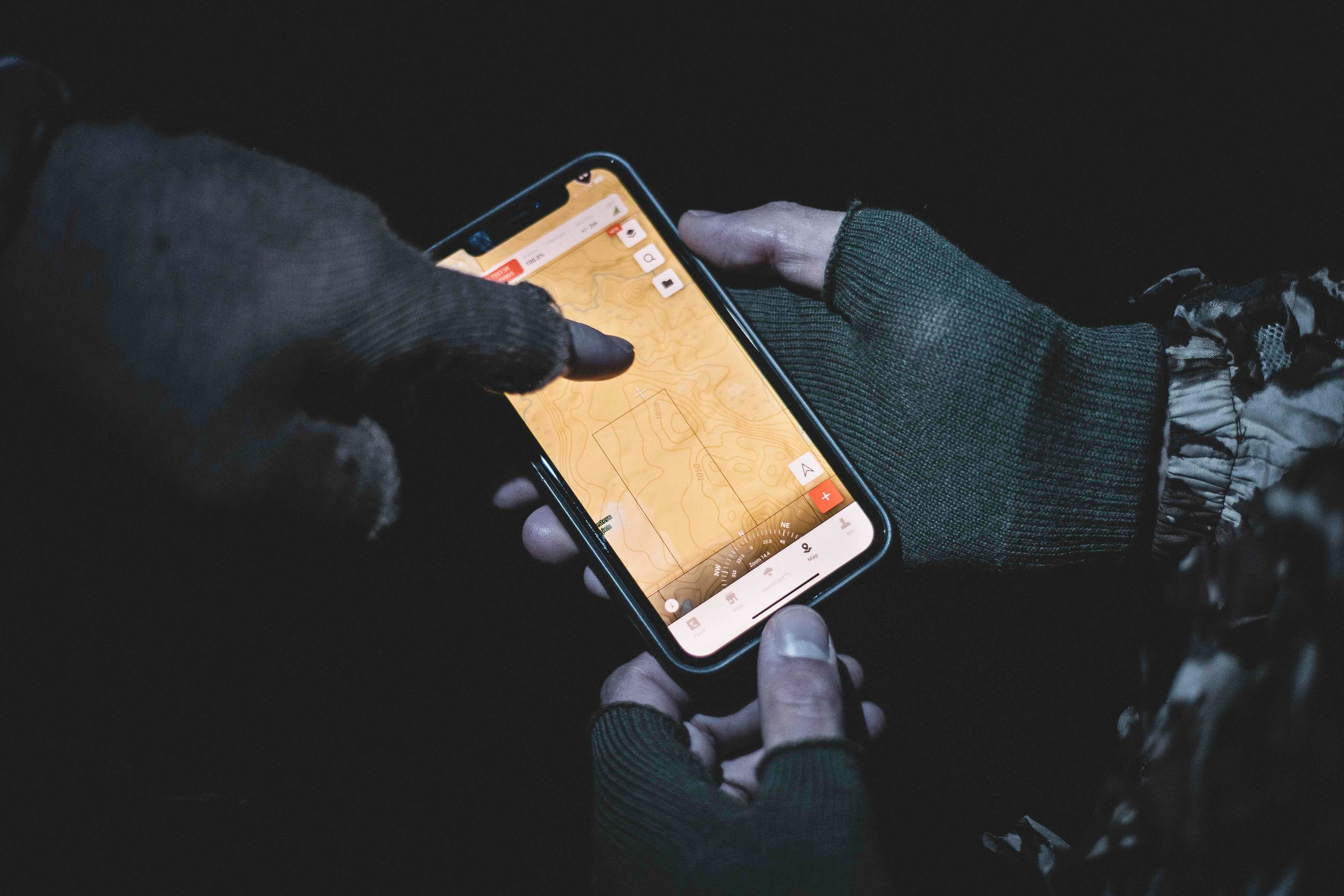
With HuntWise, you can leverage GPS and 3D mapping features to e-scout clearings near food sources, open creek and river bottoms, and entry points to pastures where turkeys are likely to search for food. The further you search away from main roads and parking lots, the better.
Use HuntWise To Tag Out This Alabama Turkey Season
Whether you're a local who has hunted during the Alabama turkey season all your life or coming from out of state, adapting and exploring new hunting locations under less hunting pressure is the key to tagging out (especially with the generous bag limits) in Alabama.
With HuntWise, you can access topographic maps that provide critical insights into high ridges and openings and allow you to mark high-potential zones. You can also track the weather and wind, follow peak hunting hours, and even access private landowner details, allowing you to request access.
Download the app and explore Pro and Elite features — free for a week.
Content reviewed and updated for current season dates and details May 19, 2026
Frequently Asked Questions about the Alabama Turkey Season (FAQs)
We have answers to some of the top questions about Alabama turkey season 2026!
Q: When does Alabama spring turkey season open in 2026?
A: Alabama's 2026 spring turkey season opens on March 21 in Zone 1 and April 4 in the WMA Zones. The season runs through May 8 statewide. Hunters should verify exact dates with the Alabama Department of Conservation and Natural Resources, as zone boundaries and dates can occasionally be adjusted.
Q: Is there a fall turkey season in Alabama?
A: Yes, Alabama does have a fall turkey season, which runs concurrently with the general deer season in most zones. Both male and female turkeys may be harvested during the fall season, unlike the spring season, when only gobblers and bearded hens are legal.
Q: What's the difference between Alabama youth and general turkey season?
A: Alabama's youth turkey season typically opens a week before the general spring season, giving younger hunters first crack at birds before hunting pressure increases. Youth hunters must be 15 years old or younger and are generally required to be accompanied by a licensed adult supervisor who does not carry a firearm. The bag limits and legal shooting hours are the same as the general season.
Q: Can I hunt turkey on Sundays in Alabama?
A: Yes, turkey hunting on Sundays is legal in Alabama on both private and public land. Alabama does not have a Sunday hunting ban, unlike some other southeastern states. Hunters should still observe all standard licensing requirements and season dates regardless of the day of the week.
Q: Where can I hunt turkey on public land in Alabama?
A: Alabama offers turkey hunting on a wide variety of public lands, including Wildlife Management Areas managed by the Alabama Division of Wildlife and Freshwater Fisheries. Some of the most popular public turkey hunting areas include the Barbour, Skyline, and Geneva State Forest WMAs.
Q: What is the best county in Alabama for turkey hunting?
A: The Black Belt region of Alabama, particularly counties like Lowndes, Wilcox, Marengo, and Dallas, is widely considered the best turkey hunting territory in the state. Calhoun and Cleburne counties in the northeastern part of the state are also well regarded for strong turkey populations among hunters who prefer public land options.
Q: Can you shoot two turkeys in one day in Alabama?
A: No, you can't shoot two turkeys in one day in Alabama. The limit is one gobbler per day (and four total per season, combined for spring and fall).

HuntWise Field Guide+ gives you more! As an Elite subscriber, you gain access to expert hunting videos with insights that help you be a better hunter.
This turkey season, elevate your turkey hunting game with our series "The Turkey Hunting Playbook" featuring Ben Cole of RootedTV! You'll get exclusive insights into scouting and finding turkeys, gaining access to land, getting your gear and shotgun ready for a hunt, and applying the right strategies to lure a bird into your sights, take your best shot, and bring home a bird.
Not a HuntWise Elite subscriber? It's time to upgrade today!